Hand-picking is the oldest form of harvesting and, when done with care, one of the least damaging to the plant. Yet it involves a set of decisions — where to grip, how much force to apply, which direction to pull — that are rarely discussed in detail. In Canadian home gardens, where the growing season is compressed into roughly five to six months, each picking event affects how much the plant can produce before frost.

The Logic Behind Low-Disturbance Picking
Plants respond to physical stress. When a branch is pulled sharply, the force travels beyond the picking point — into the stem, to nearby developing fruits, and sometimes to the root system through soil movement. Repeated careless picking can accumulate stress that slows new flower set in the weeks that follow.
In practical terms, this means that how a vegetable is removed from the plant matters almost as much as when it is removed. Two harvests done correctly, with minimal branch movement, will typically produce better follow-on yields than one that damages the picking point or disturbs surrounding clusters.
Agriculture and Agri-Food Canada notes that proper harvest handling reduces produce damage and supports continued plant productivity — a principle that applies equally to the picking motion itself. See the Horticulture publications from AAC for crop-specific guidance.
Grip and Force by Vegetable Type
Beans (Bush and Pole)
Beans are among the easiest vegetables to hand-pick cleanly. A mature bean pod detaches with a short, firm pull directed parallel to the stem — not outward or downward. Pulling outward puts lateral stress on the stem junction; pulling downward can strip the whole cluster if multiple pods share a node.
Hold the main stem with one hand, two to three nodes above the picking point. With the other hand, grip the pod close to its attachment point and pull toward the stem — not away from it — with a short motion. The pod will separate cleanly at the abscission layer without tearing stem tissue.
Peppers
Pepper stems are woody and do not have a clean abscission zone. Pulling a pepper by hand without holding the branch nearly always results in the branch moving, which may dislodge developing flowers at nearby nodes. For hand-picking without tools, hold the branch firmly just above the fruit junction, then twist the fruit a quarter turn and pull straight down. This releases the fruit at the calyx without stressing the branch.
Avoid picking peppers in hot afternoon conditions when stem tissue is most pliable and most susceptible to stretch damage.
Cucumbers
Cucumbers cling to the vine with a stem segment that does not break cleanly under tension. Pulling a cucumber directly will either leave a stub of vine tissue on the fruit (which promotes spoilage) or strip bark from the vine at the picking point. The correct approach is to grip the cucumber stem — not the fruit — a centimetre or two above the fruit shoulder, and snap it with a quick lateral motion. The stem breaks at this point without pulling the vine.
Zucchini and Summer Squash
Zucchini stems are thick, fibrous, and firmly attached. Hand-picking without tools is difficult and often results in tearing. However, for gardeners who prefer to avoid tools entirely, the technique involves gripping the fruit by its base (not the stem) and applying slow, firm rotational pressure — a full half-turn — before pulling. The stem fatigues at the attachment point and releases. This takes more effort than a clean cut but causes less disruption to the vine than a straight pull.
Timing Within the Day
The internal water pressure of plant tissue — turgor — varies throughout the day. In the morning, after overnight rehydration, stems are at their most rigid and least prone to tear damage during picking. By mid-afternoon, particularly on warm days above 24°C (common in southern Ontario and British Columbia from July onward), turgor drops and stems become more pliable and easier to damage accidentally.
Picking in the morning also has the benefit of lower insect activity around flowers and developing fruits. Handling a squash vine in peak afternoon heat, when pollinating insects are most active, increases the chance of disturbing pollinators mid-visit on flowers adjacent to the picking point.
Root Vegetables: A Different Challenge
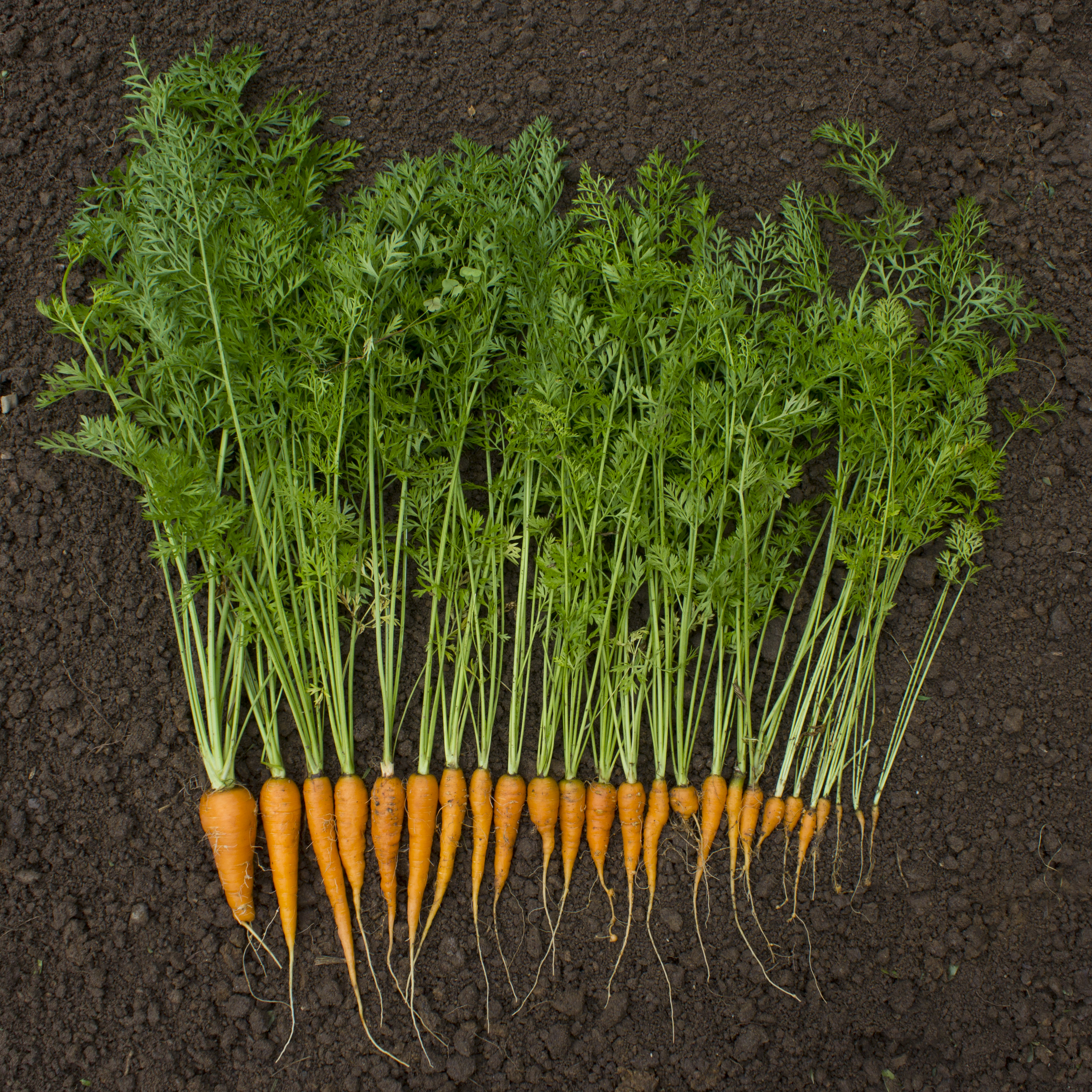
Carrots, beets, and radishes are not picked so much as extracted. The challenge is removing the root without breaking it at the shoulder — the point where the root transitions to the stem — and without disturbing adjacent roots that are still developing.
For carrots in loose, well-worked soil, grip the foliage close to the soil surface and pull straight upward with steady, even pressure. Do not jerk. In compacted soil, loosen the soil around the carrot with a finger before pulling. Watering an hour before harvest in dry conditions makes extraction significantly cleaner.
For beets, the foliage-to-root connection is stronger than with carrots, but the root itself is closer to the surface. A slight rotation during extraction — a quarter-turn each way before pulling — breaks any lateral root connections that might otherwise snap the main root.
Avoiding Noise and Disturbance
In a quiet garden, the sounds that matter most are not those made by tools but those made by disturbed foliage and snapping stems. Reaching deeply into a plant canopy to access interior fruit generates considerable leaf movement and branch contact. A consistent technique involves:
- Approaching the plant from the same side each time, so the canopy is disturbed in a predictable pattern
- Using the forearm to hold back outer branches rather than pushing through them
- Moving from the top of the plant downward, so disturbed branches settle before working the lower sections
- Pausing briefly between picks to let the plant settle before applying force to the next fruit
These habits also reduce the chance of accidentally knocking off developing fruit or disturbing delicate flower clusters.